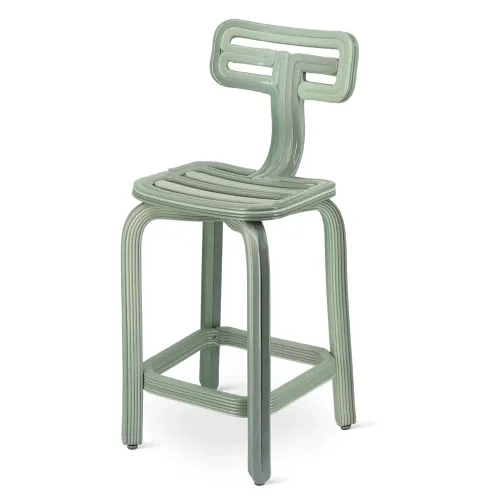
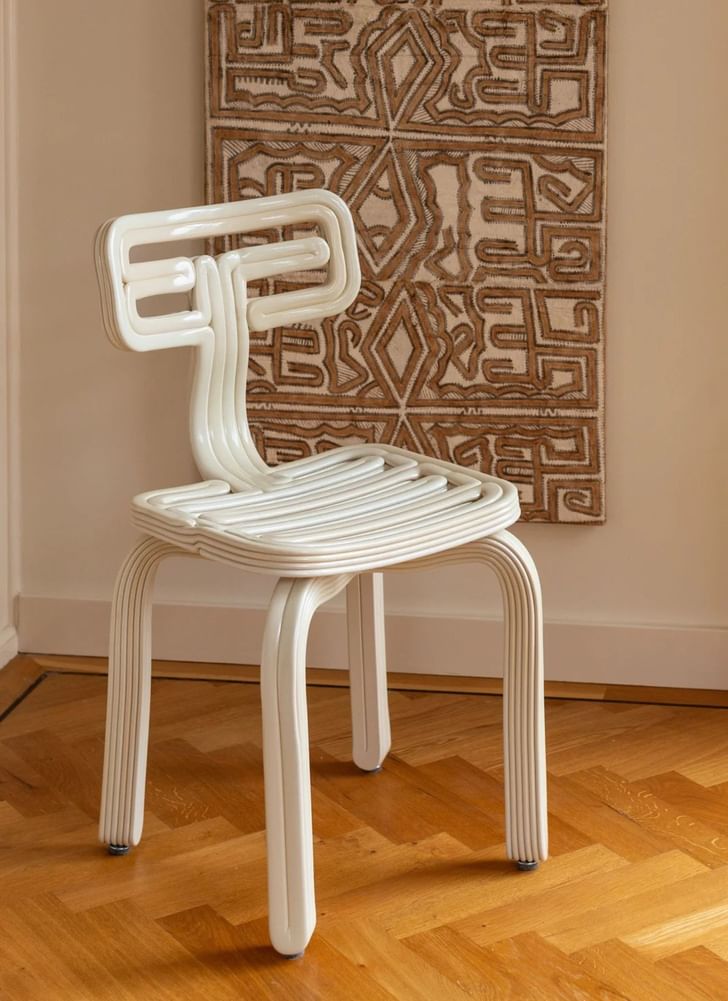
The Chubby Chair is made from the equivalent plastic of an entire refrigerator. Reimagining waste as wonder, Dirk van der Kooij’s signature extrusion technique produces soft, bulbous lines that give the chair its iconic form. Each piece is offered in a dynamic palette of 12 colors, with every shade subtly influenced by the material’s origin and composition. Built to last, and designed to spark joy, the Chubby Chair is a modern classic for sustainable spaces.
Founded by Dirk van der Kooij in 2009, Kooij is rooted in the principles of circular design and driven by a simple question: can plastic be an honest, enduring material? For more than fifteen years, the Amsterdam-based studio has explored that idea through a unique combination of material innovation, technological experimentation, and craftsmanship.
Every piece in the collection begins with reclaimed or recycled materials. Discarded CDs, recycled plastics, leather sofas, kitchen appliances, and even diseased wood are transformed through a combination of custom-developed robots, presses, and extrusion technologies, alongside the expertise of skilled carpenters, welders, colorists, and finishers. The studio describes the process as carrying waste from loss to luxury.
The results have earned international recognition. Today, Kooij's work can be found in the permanent collections of the Museum of Modern Art, the San Francisco Museum of Modern Art, the Stedelijk Museum Amsterdam, the Vitra Design Museum, the Design Museum, and the National Museum.
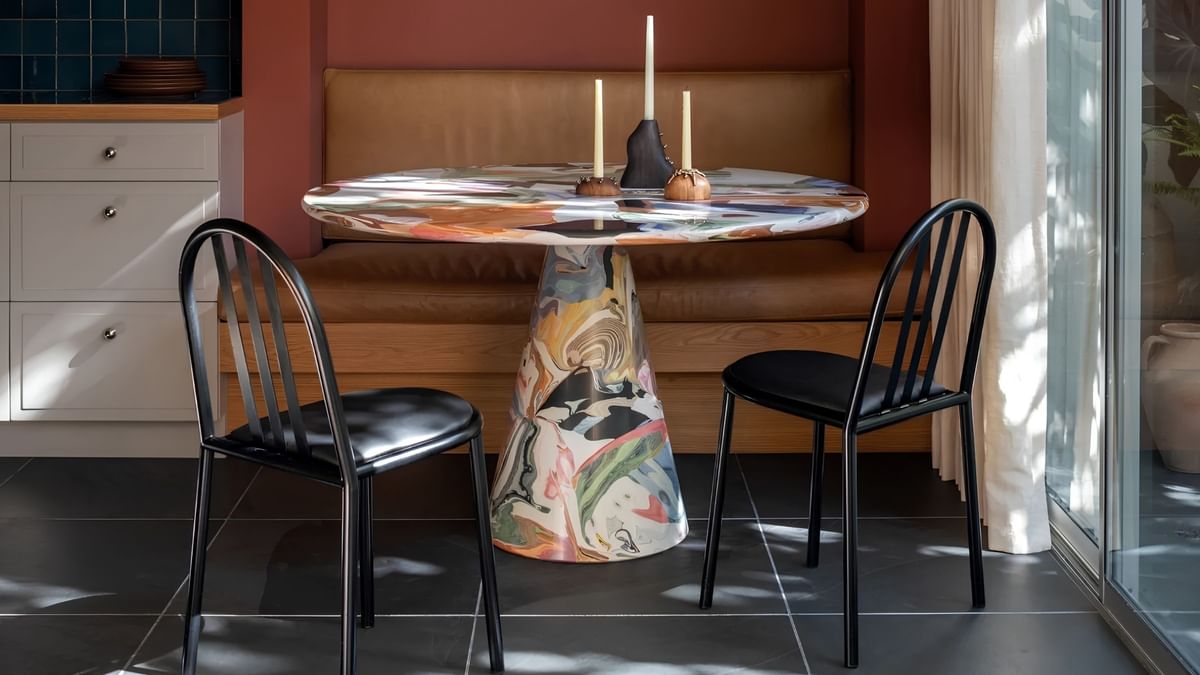
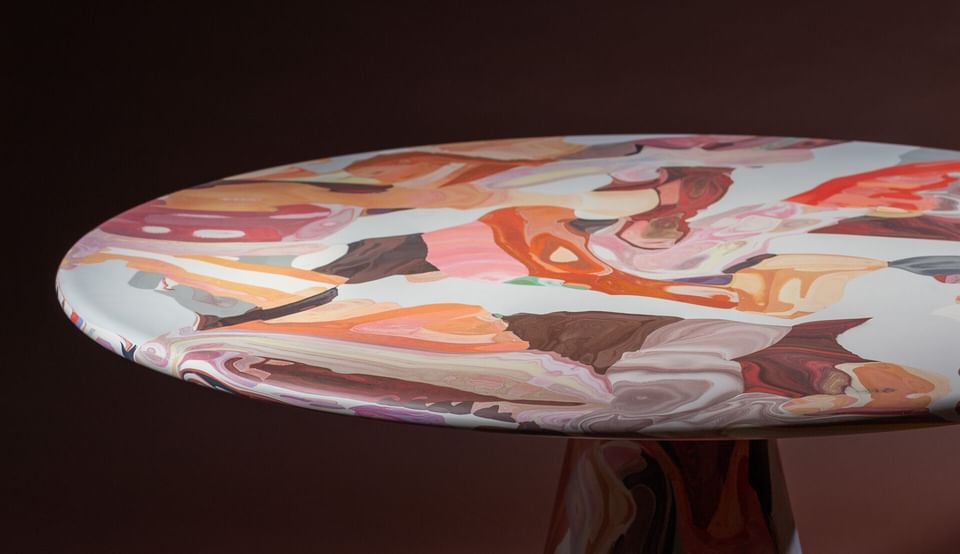
The Meltingpot Dining Table is Dirk van der Kooij's most direct expression of circular design. Production offcuts, recycled plastic prototypes and color-testing remnants are selected, composed and compressed into a durable surface that is entirely unique to the moment of its making. Specific colors and patterns cannot be specified, as the material availability at the time of production determines the outcome. For residential interiors that value sustainable luxury furniture with genuine material integrity, it is a dining table that cannot be replicated anywhere else.
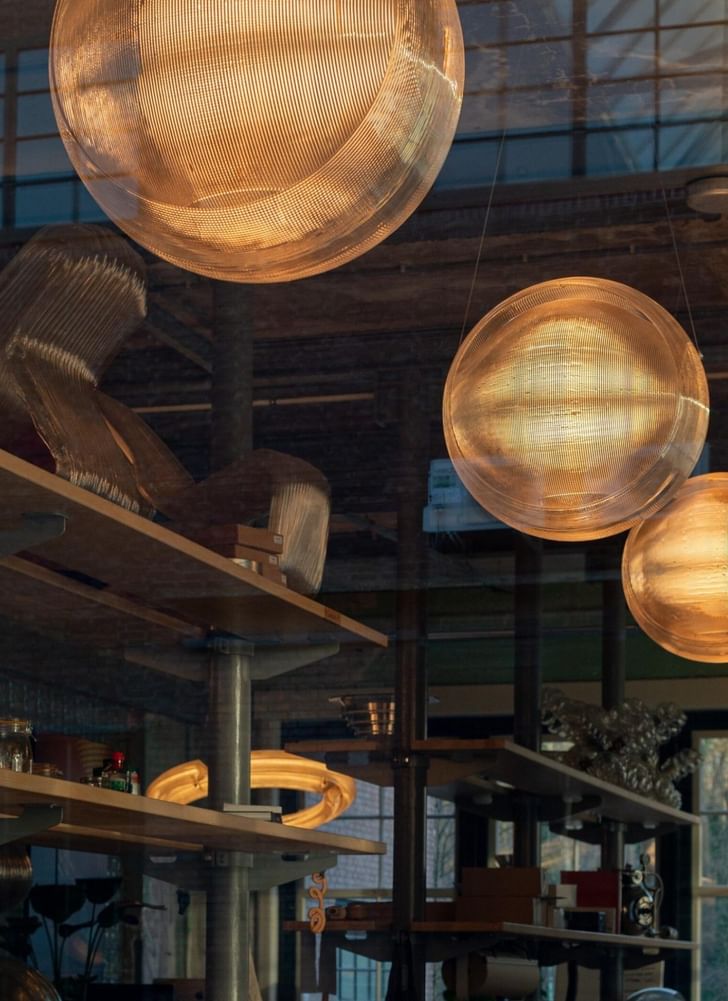
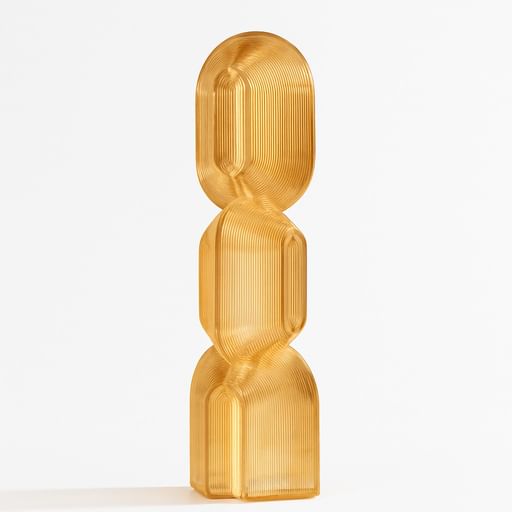
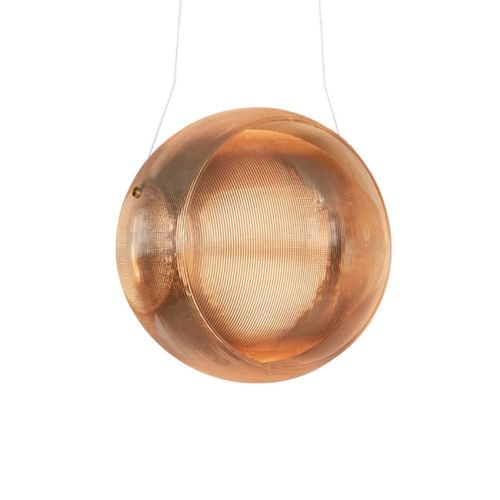
Handcrafted in Amsterdam, the Helm Pendant is an illuminated sculpture formed through additive manufacturing with syrupy ribbons of recycled plastic. As light passes through its intricate, corrugated structure, it diffuses into a soft, immersive glow. The overlapping bands intersect at crisp angles, creating a crystalline effect and a dramatic play of shadows.
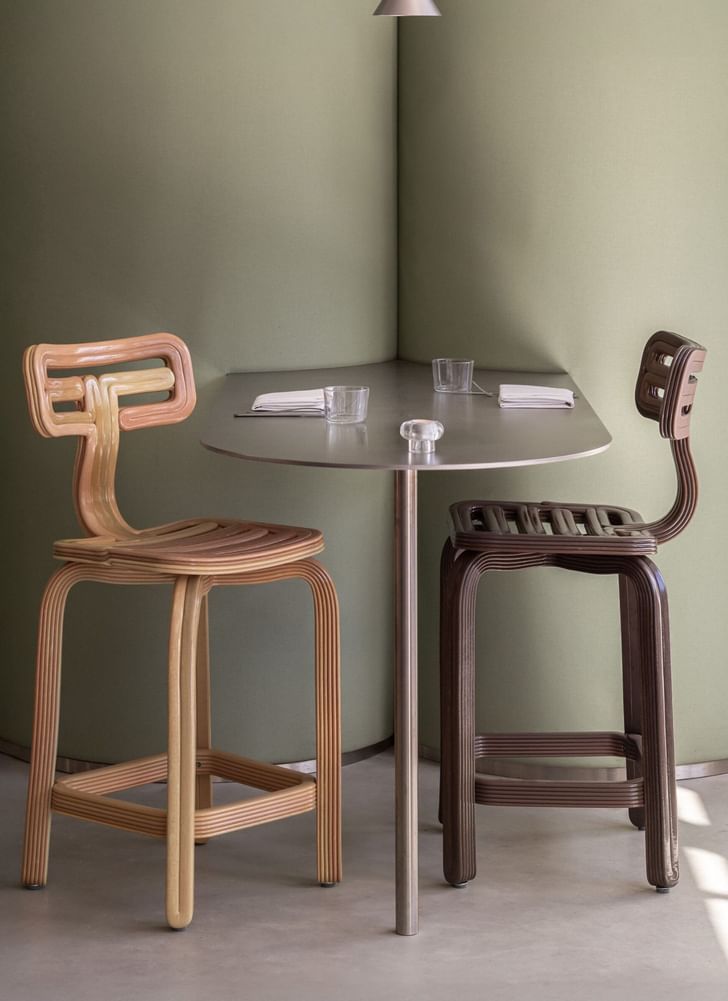
With its rounded form and chunky silhouette, the Chubby Stool evokes the delight of childhood play while delivering serious design credentials. Handcrafted from robust oak wood, it mimics the look of malleable materials like Play-Doh or soft clay, adding a tactile, sculptural presence to any room. Its bold curves are enhanced by a range of bright primary color options. Recognized by the Vitra Design Museum and The Design Museum, the Chubby Chair is both collectible and enduring.
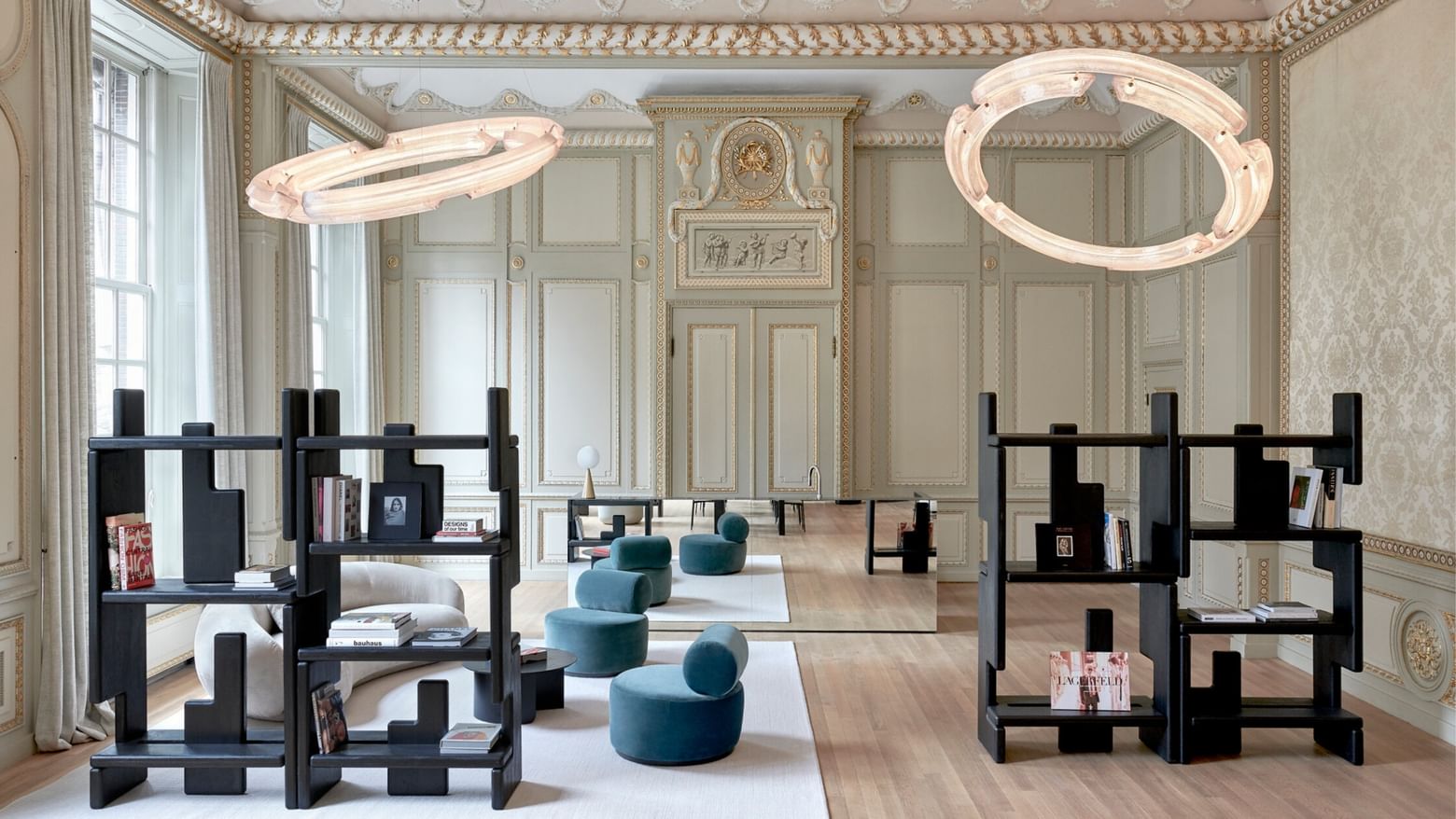
The Buitenhuis Chandelier is a segmented halo of twinkling light, composed of delicate 3D-printed arcs formed from recycled plastic. Originally created to float within a spiral staircase, the ring tilts effortlessly thanks to a smooth two-way pulley system. Each arc is built slowly from molten plastic sourced from rooftop windows, safety eyewear, and industrial chocolate moulds—materials that lend both durability and glasslike transparency. Soft, starry LEDs are diffused through the rippling surface, creating a warm, atmospheric glow.
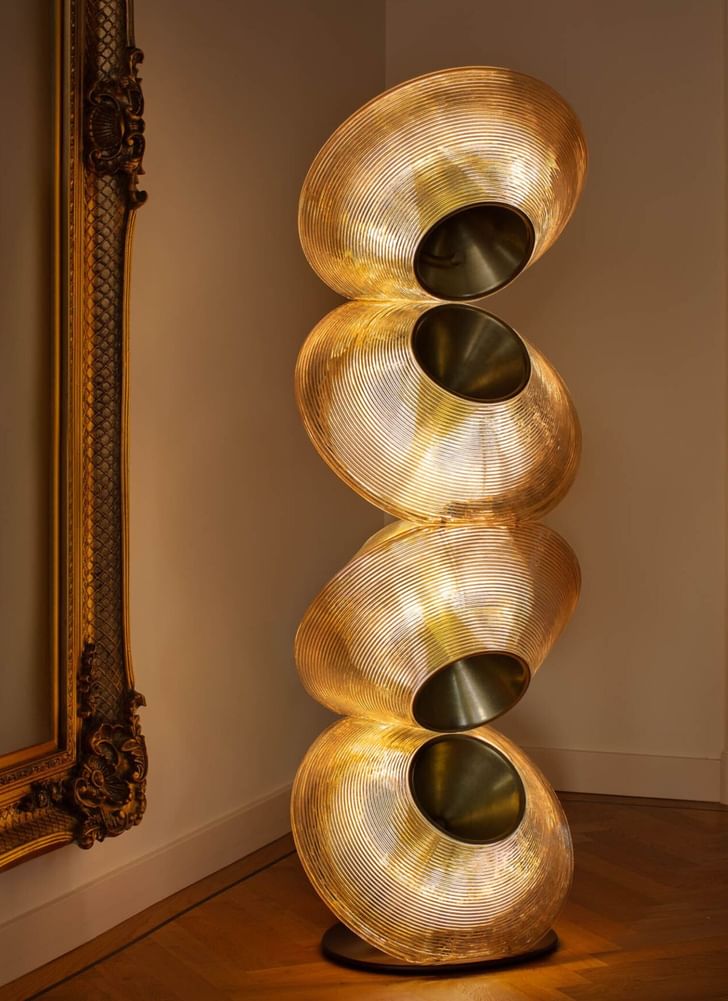
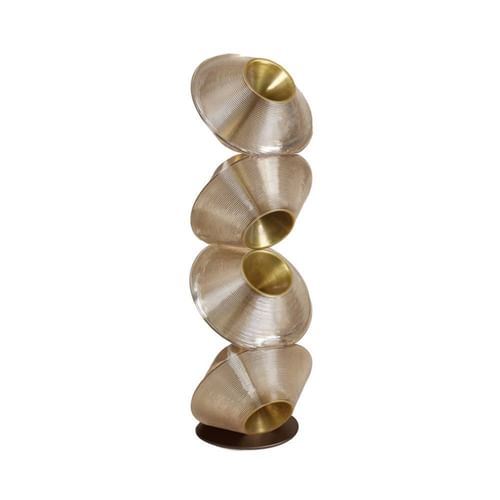
Designed by Dirk van der Kooij, the Tol 4 Floor Lamp takes its name from the Dutch word for spinning top. Its soft, rounded volumes appear suspended in motion, balancing a sense of dynamic energy with a grounded, sculptural presence. Kooij's signature recycled plastic is paired with warm brass elements, creating a rich material dialogue that shifts with the light around it. In darkness, the brass recedes and luminous bands appear to float in space. In ambient light, the two materials interact to produce a layered, atmospheric quality that few sustainable lighting pieces achieve. A sculptural floor lamp that brings material contrast, considered craftsmanship and the principles of circular design together in a single, striking form.
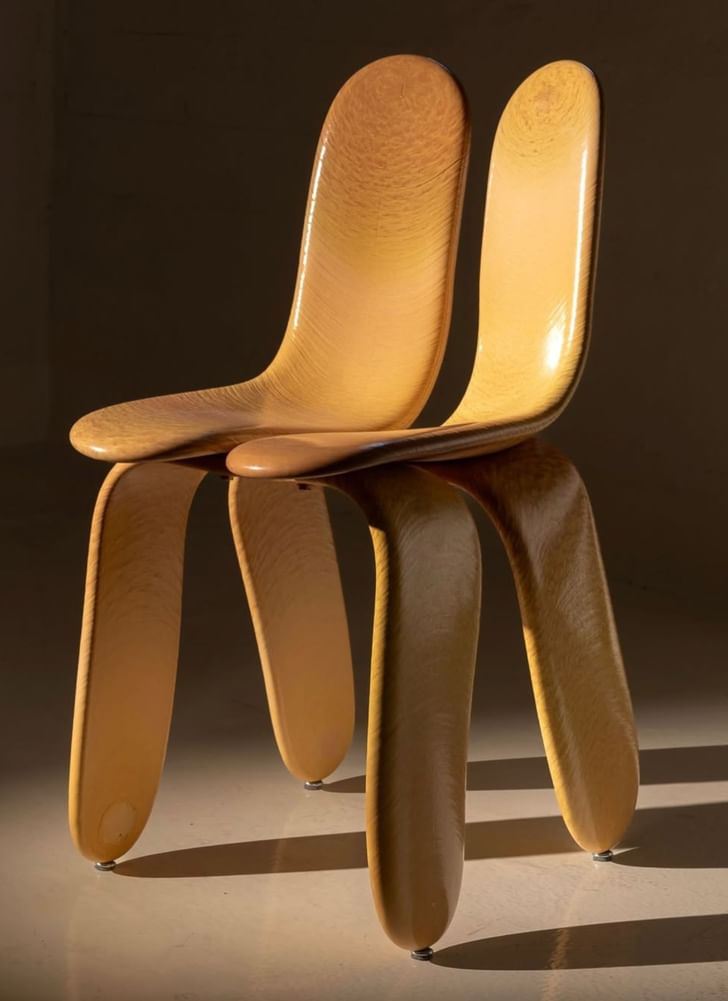
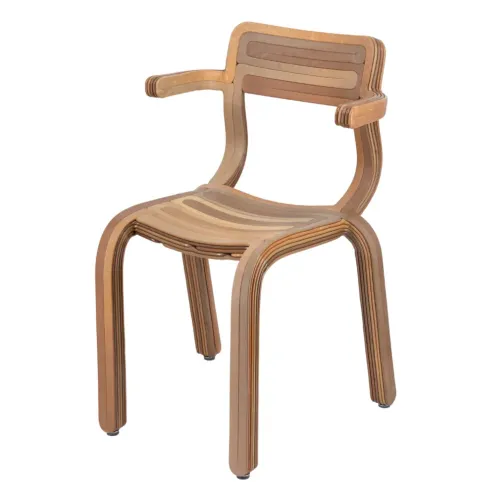
The Row Chair, designed by Dirk van der Kooij in 2025, begins with a question: how can four lines be shaped for the human body while creating an entirely new archetype? Freshly extruded recycled plastic plaques, curved by hand while still warm from the studio's robots, form a comfortable and visually distinctive chair whose shape is as much a product of material behavior as intentional design. Pigment is introduced sporadically into the extruder, meaning no two chairs share the same color expression. A subtle cut at the end of each component marks its origin, leaving the production process visible in the finished object.
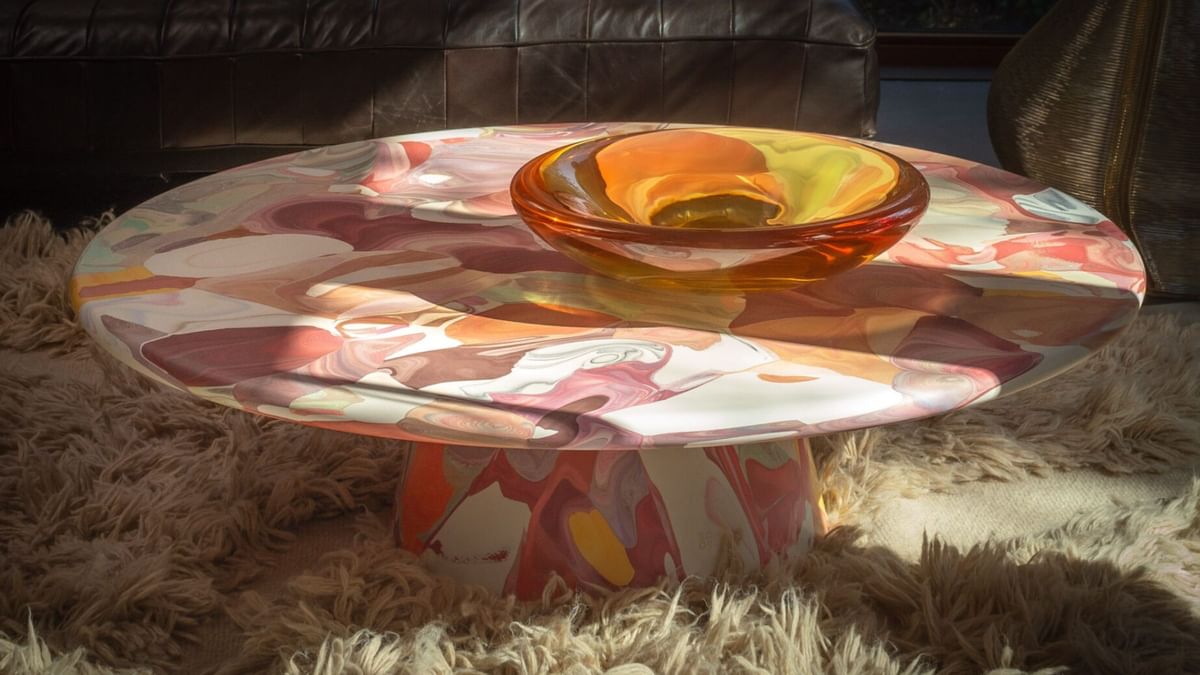
Recycled plastic prototypes, color tests and production remnants become the raw material for the Meltingpot Ellipse Coffee Table, designed by Dirk van der Kooij. Each piece is composed by the studio's in-house colorist, whose intuitive arrangement of reclaimed materials is then compressed into a surface that is entirely unique to that moment of making. The unpredictability is the point. For contemporary interiors that value sustainable design with genuine material integrity, it is a coffee table that carries its entire story on its surface.
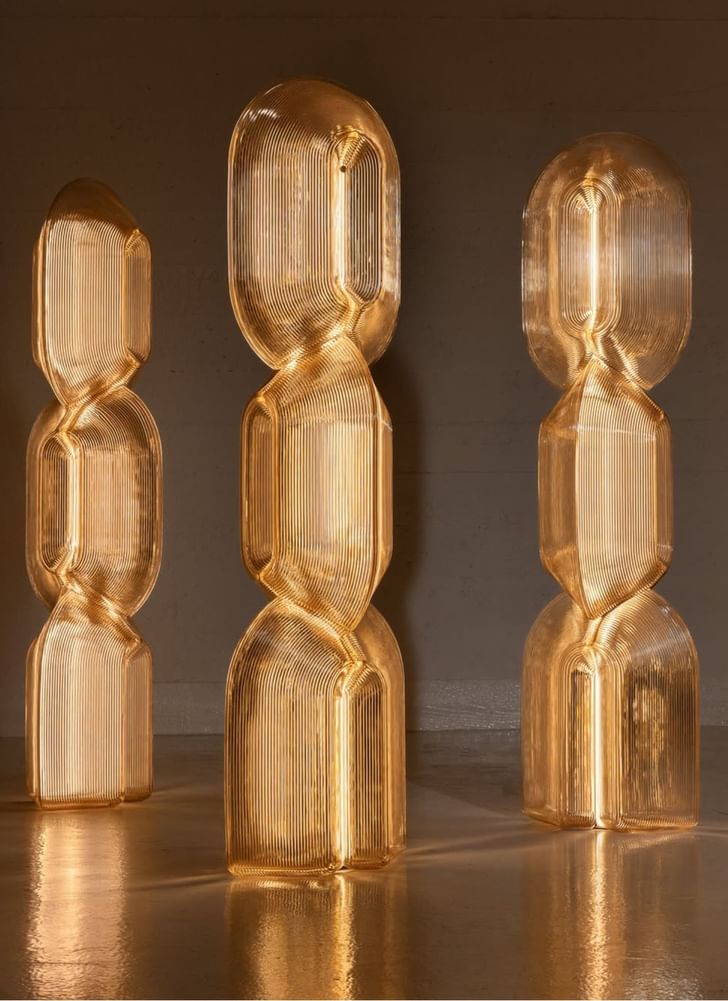
Designed by Dirk van der Kooij, the Accrete Floor Lamp is built from robot-extruded modules whose fluted surface and folded double-wall structure shape and soften the light they emit. As each module rotates through the form, the silhouette shifts with the viewer's perspective, producing a sculptural floor lamp that reads differently from every angle. A tactile brass button integrated into the upper module controls dimming and power with quiet precision. The result is a sustainable luxury lighting piece that sits at the intersection of digital craftsmanship, retro-futuristic design and exceptional functionality.
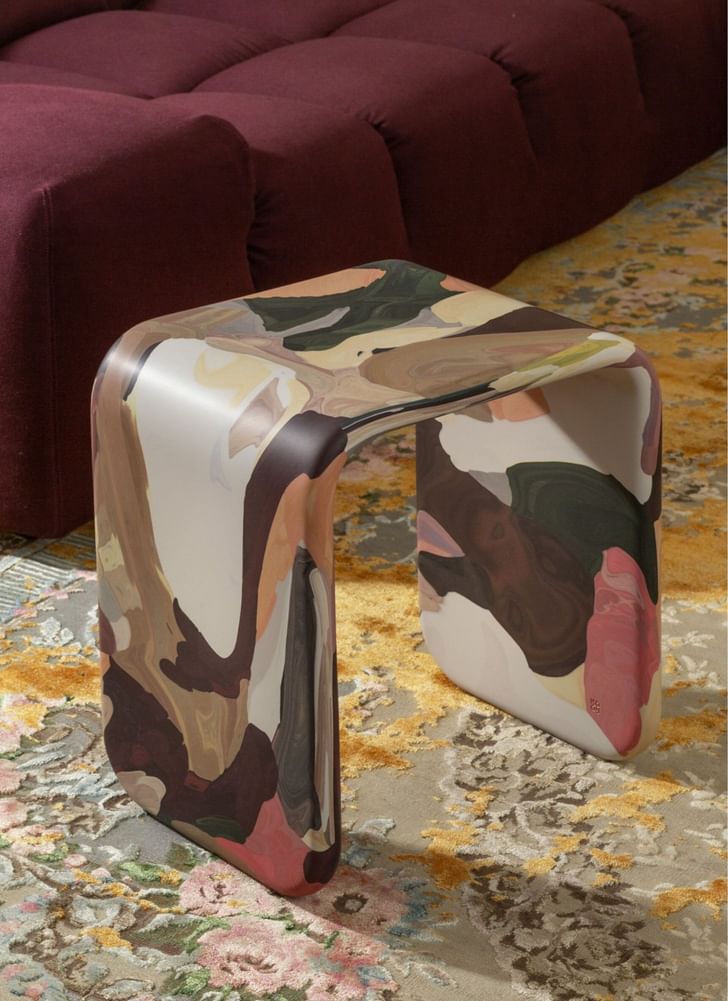
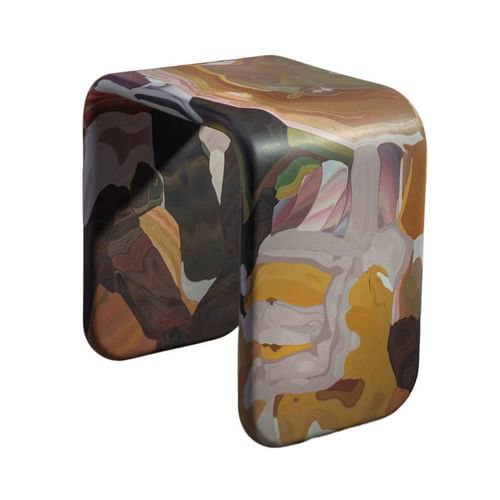
The Staple Stool, designed by Dirk van der Kooij, distills Kooij's circular design philosophy into its most minimal form. A single U-shaped piece of recycled plastic bends and performs without joints, fasteners or reinforcements, demonstrating the material's structural integrity through the simplicity of the form itself. It functions equally as a stool or side table, and its understated silhouette allows the distinctive colors, textures and patterns of Kooij's recycled plastic to take center stage. An honest, durable object that proves sustainable design and contemporary craftsmanship are not mutually exclusive.
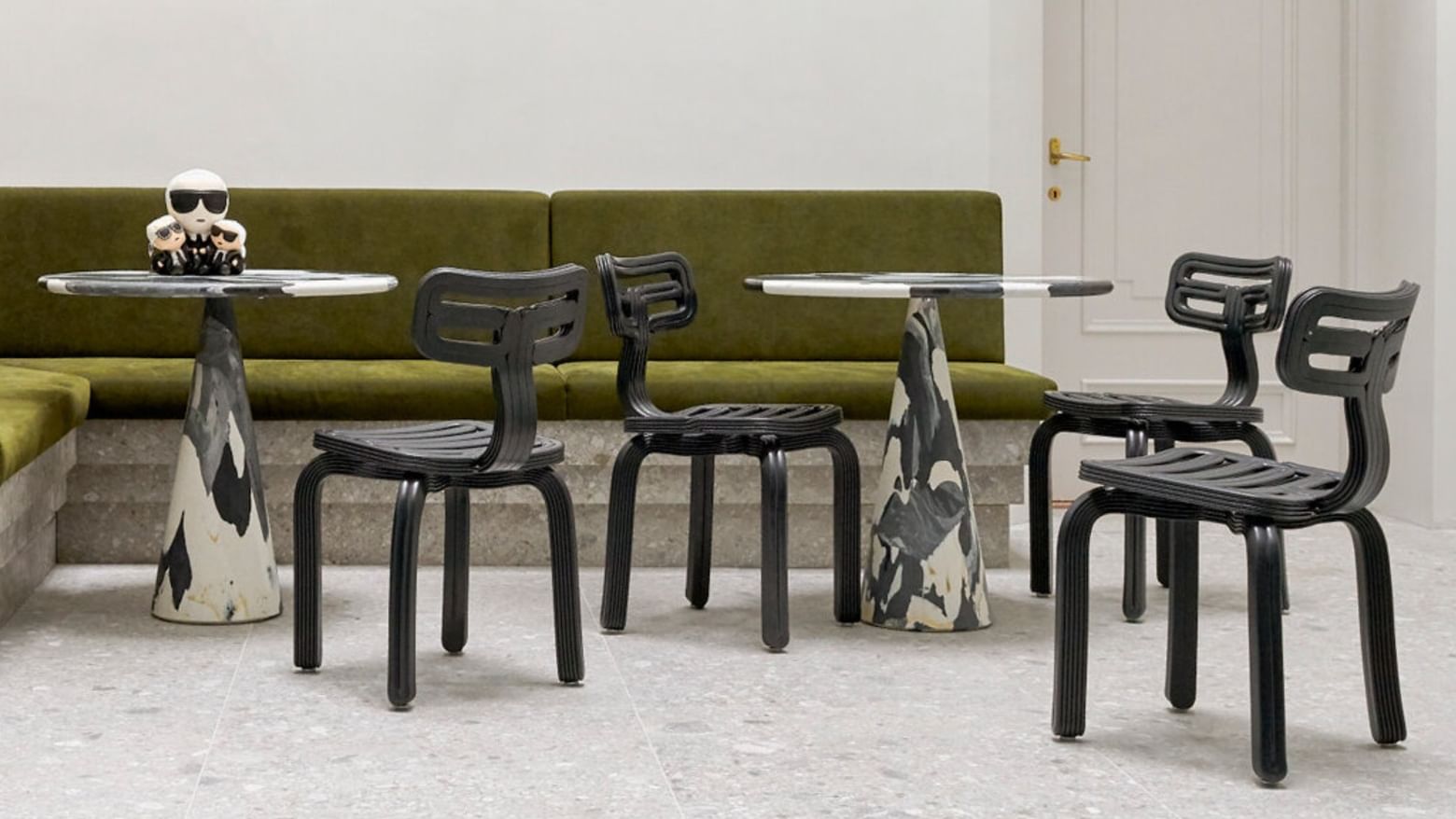
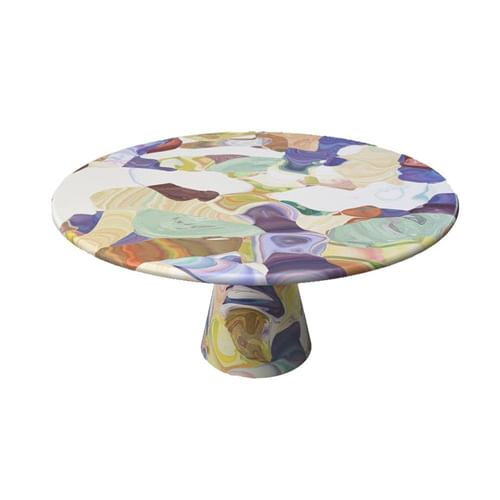
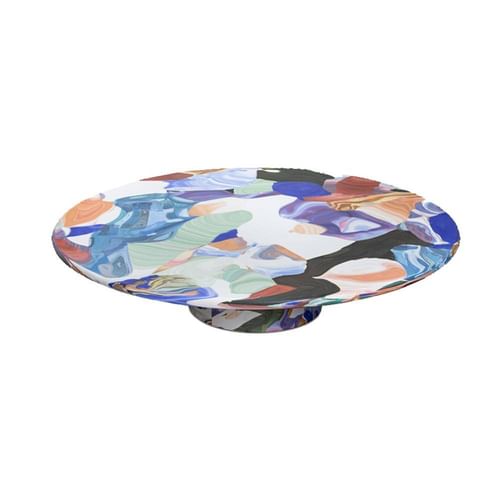
Made from the remnants of design experimentation, the Meltingpot Bistro Table brings spontaneity and sustainability to life. Kooij’s colourist assembles each tabletop by hand using recycled plastic swatches and tests, resulting in bold, unpredictable compositions. The table's palette cannot be preselected—its charm lies in the ever-changing blend of tones and textures. Each piece is a tactile record of past processes and present intuition.
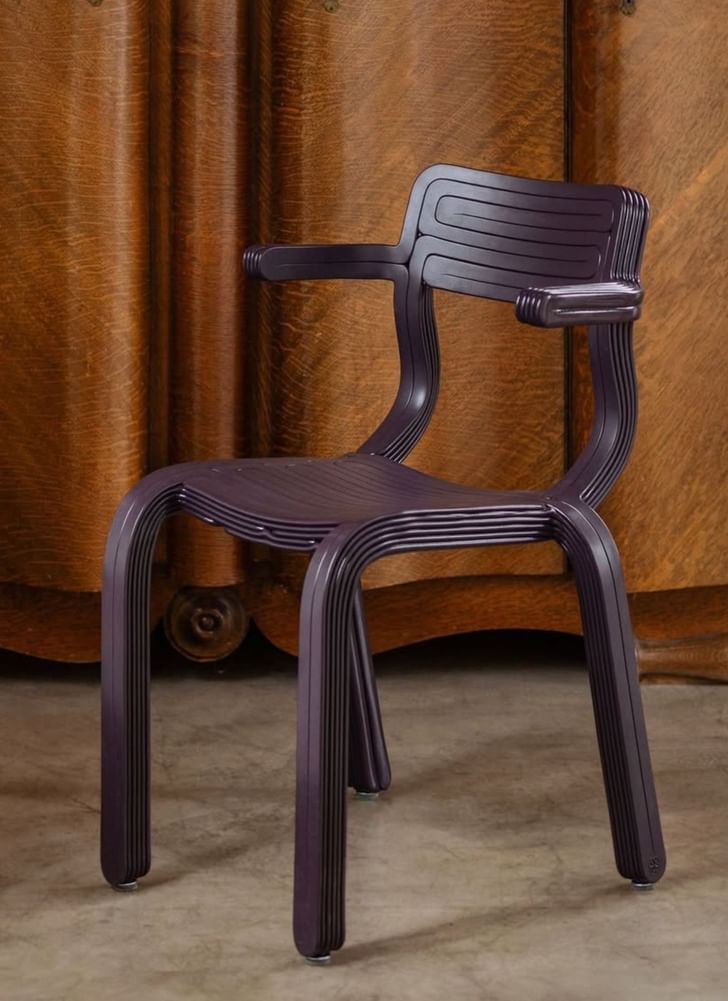
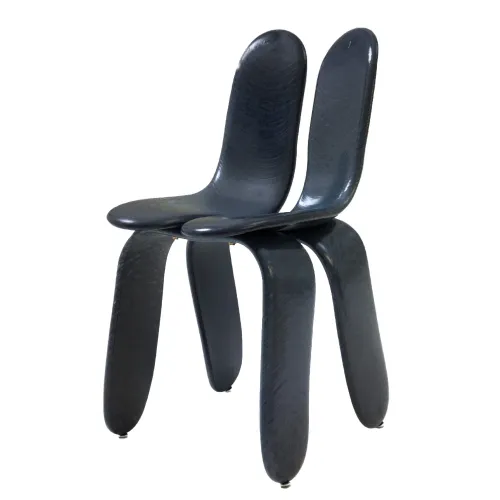
Elevated through 3D-printed innovation, the RVR Chair is a sculptural rethinking of the classic monoblock seat. Its reverse-chubby form is intentionally flattened to create a smooth, supportive surface that gently hugs the body. Crafted from a single extruded shape, the chair highlights tonal pigmentation that subtly shifts across its broad contours. The RVR stands as a refined fusion of design, comfort, and modern material technology.
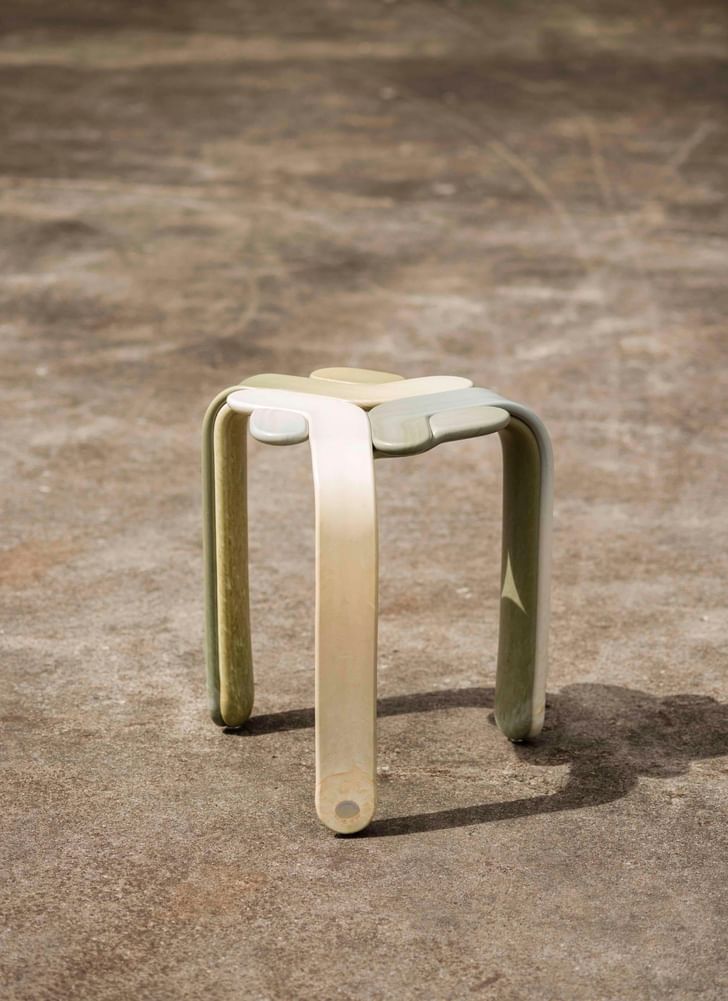
The Stopstool offers a bold, graphic interpretation of everyday seating. Designed as a response to the fluid lines of the Endless Chair, this piece is built from thick, interrupted extrusions of molten plastic. Structural integrity is achieved through three overlapping joints, while rich pigmentation adds visual warmth and texture. Stackable and sturdy, it’s a functional object with the energy of a three-dimensional sketch.
To find out how our pieces can enhance your design project, please contact us at 312.329.9000 for Chicago or 212.262.9000 for New York or email [email protected]. Haute Living's design professionals are ready to assist your needs in every aspect of the design process - from conception and technical specification to final delivery and installation.